08 · Engineering & research
Academia
My PhD asked how a worker can teach a collaborative robot to assist them by showing it, rather than programming it. Alongside the research I contributed to CEA-List’s robot controller software, so the methods ran on real industrial robots and not only in papers.
The thesis
- Question
- How can cobots become easier to guide, more comfortable to work with, and teachable through demonstration instead of rigid programming alone?
- Setting
- Comanipulation: a person and a collaborative robot sharing the same task in an industrial workplace.
- Approach
- An iterative method based on kinesthetic teaching: the worker physically moves the robot to show it the task, and refines it over repetitions.
- Contribution
- Virtual guides built from displacement splines. They support the robot during the task while keeping the flexibility and comfort of the person working with it.
Contributions to CEA software
At CEA-List I worked on the software behind CORTEX, a suite for faster and easier robot controller engineering. That is where I built my foundations in real-time control.
- Robot control
- Control laws for industrial robots, including the assistance modes from my thesis.
- Demonstration
- Programming by demonstration, integrated into the controller.
- Modelling
- Dynamic modelling of the manipulators.
- Software
- Real-time, modular C++ for industrial controller engineering.
Education
- 2014–2018
- Université de Toulouse III · PhD in control and robotics, on control and learning from demonstration applied to comanipulation.
- 2012–2014
- Arts & Métiers ParisTech · Engineering degree and research master, from industrial and mechanical engineering to advanced systems and robotics.
- 2009–2014
- Universidad EIA, Colombia · Mechatronics engineering degree, an interdisciplinary training in the design of automatic systems.
Distinctions
- 2023–2026
- Member of the France 2030 digital college, selected by the State (General Secretariat for Investment).
- 2019
- PhD prize from La Fabrique de l'industrie, under the Ministry of the Economy and Finance. Watch the webinar.
- 2012–2014
- Young Engineers in France scholarship, Ministry of National Education.
From the PhD to assistive robotics
What connects the PhD, Extender and my product work is one question: how to build assistance that stays adaptable and understandable without taking agency away from the person.
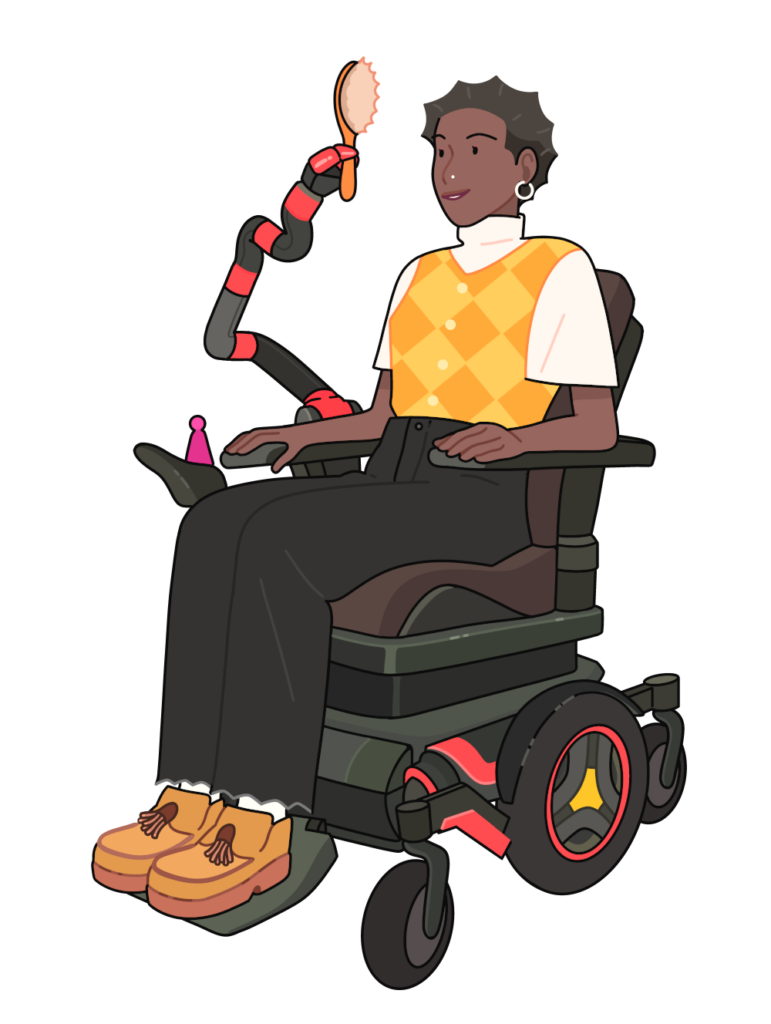
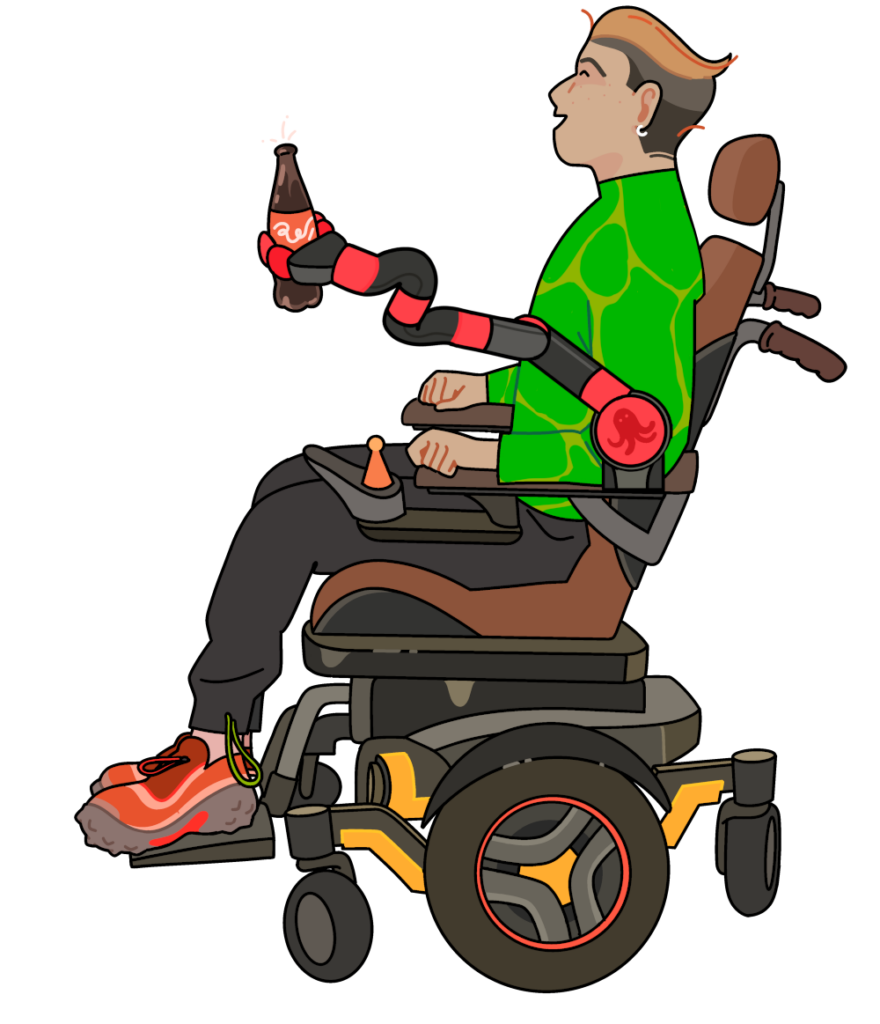
On Extender the question became daily autonomy: helping wheelchair users operate a robotic arm in real life, through interfaces that are technically robust, clinically relevant and respectful of the user’s own way of acting. The software lives in the open ISIR-EXTENDER ecosystem, a modular ROS 2 stack for assistive manipulation.
The thesis and publications are listed in Work & writing.